Historical Hats, Costumes & Accessories |
||
|
Home Crown Hood and Liripipe Man´s Cap Chaperon Torque Bycocket Crispinette Tressour Crispinette Nebule Templars Cross Tree Headdress Heart Shaped Hennin Attor de Gibet Jewelled Coif Hennin Flowerpot Hennin Halo Bonnet Reticulated Caul Flemish Hood Early Gable Headdress Tudor/Elizabethan Pouch Gloves Wedding Dresses Specialist Commissions Kats Kittens Authentic Effigy Based Headwear Miscellaneous Contact Links |
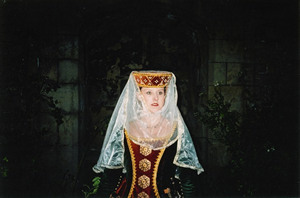
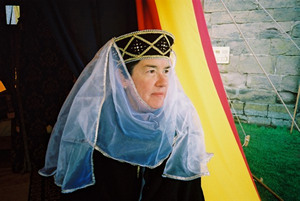
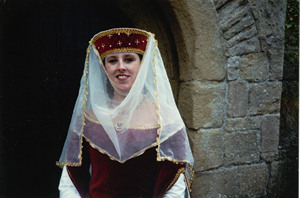
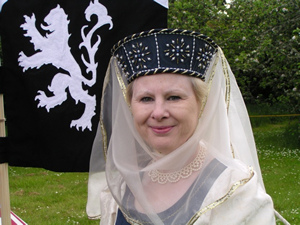
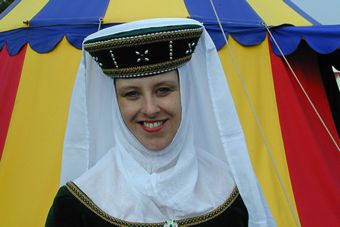
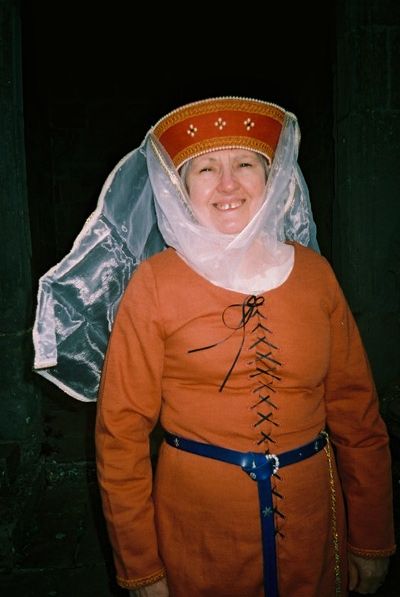
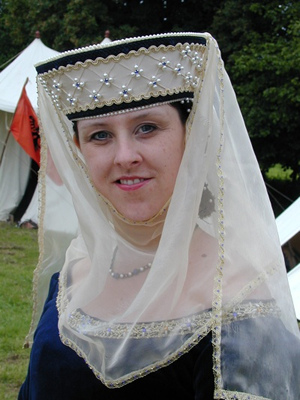
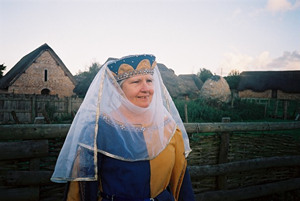
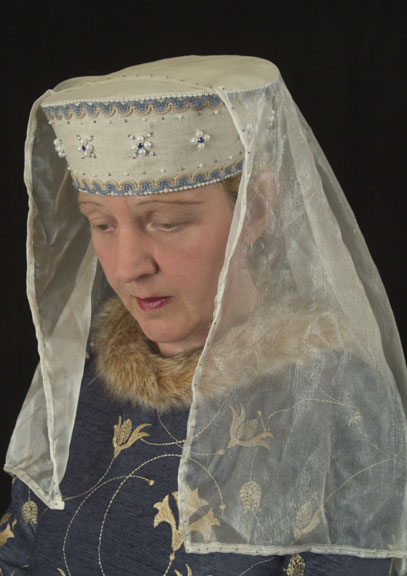
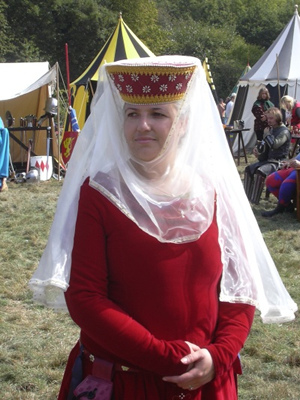
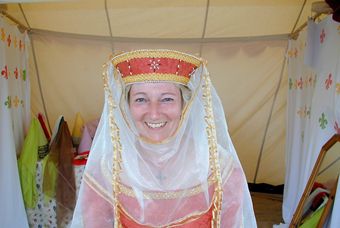
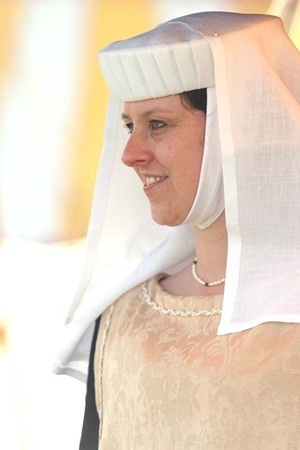
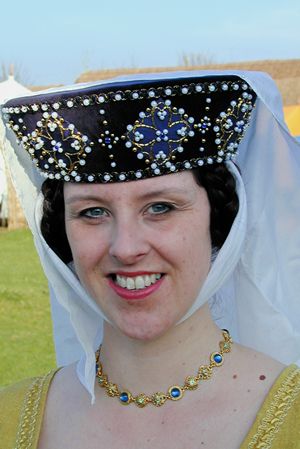
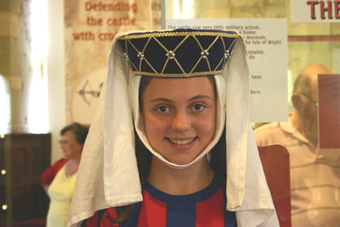
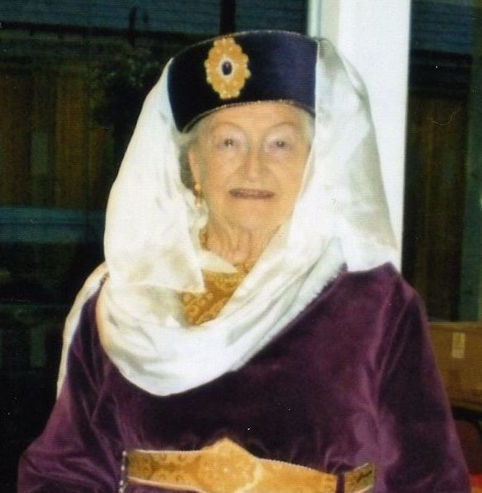
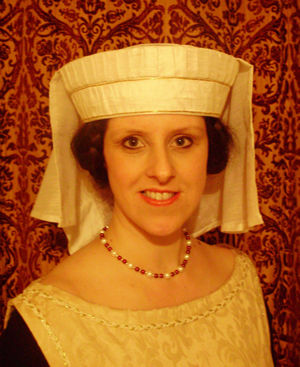
The Torque C.1220 - 1327 By 1220 it became fashionable to wear the "Torque" at every level of society. In France it was referred to as a "Chappel." It was widened into a stiff linen band or "fillet" (approx 4") frequently in some brilliant colour in linen or silk (White and red were popular). A narrow chin band was worn with this "Torque" and was called the "Barbette." This was a narrow piece of cloth that was worn under the chin, which went up either side of the face to the top of the head, under the "Torque." At this point in time, no hair was visible around the face as the hair was confined in plaits or a net at the back of the head. This net was known as the "Crispine" and was shaped like a bag. They were made out of gold, silver or coloured silk. Around about 1260, the hair started to be seen. Plaits became coils (Ramshorns), which were worn under the "Torque" on either side of the face. Clever Ladies in waiting artfully arranged veils over these coils. They were worn either tucked up, around or in the "Torque", as there was sometimes no crown (top). A few of the "Torque´s" from this time period can be seen in various churches around the country. York Minster is one such place. Here you can see the many variations of the "Torque". Plain, Pleated or solidly crowned. Most of them have the hair curled or coiled over each ear. During the period of Edward I (1272), the "Torque" was wider at the top than the bottom and became a heavily jewelled band. The hair was still coiled over each ear as before and veils arranged in the same manner. In 1307 the "Torque" was wider again and was sometimes covered in gold work and jewels for nobility. Hair was still coiled into the ramshorns but was now starting to be encased in the Crispine over each ear (Later to become the "Crispinette"). Young or old of the upper and middle classes wore this style of headdress but a strip of cloth or braid was worn by humbler folk. By 1327 the "Torque" was still worn by women but other forms of headdresses came to be in use.
Headdress Design © 2001 - 2011|Site Design © 2005, 2006, 2007, 2008, 2009, 2010, 2011, 2012, 2013 All Items produced by Kats Hats © are subject to full copyright and may not be reproduced under any circumstances. Individuals have my permission to print single copies of the pictures or texts on this website for research for non-commercial purposes and private study provided Kats Hats © name, the copyright notice and this permission notice are preserved on all copies. Linking to this site is allowed without permission. For any other use please contact me. | |
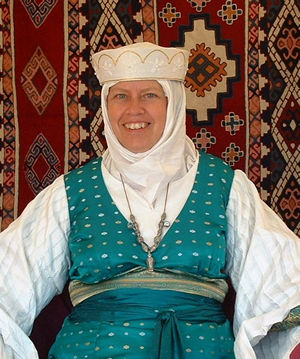 Around the time of 1199 the